Diving into Egypt’s Aid and Politics 4/5


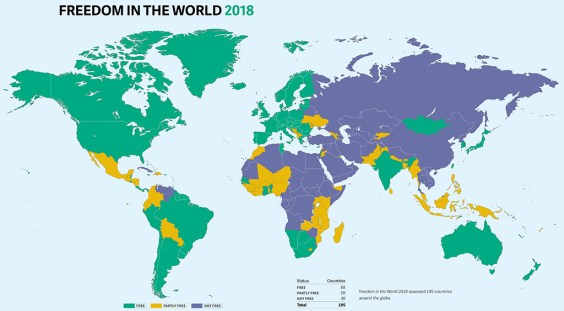
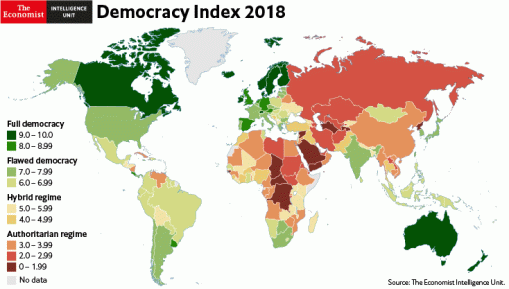
Democracy-map-2018-website


US aid to Egypt had continued after Sadat’s assassination in 1981 and during Mubarak’s era which lasted 30 years (1981-2011) and was sustained after the toppling of Mubarak by the Egyptian upraising in 2011 and till the composition of this blog. Mubarak monotone era (until 25th of January 2011); succeeded not only in maintaining the flow of aid granted to Egypt from the USA, other western allies and key aid organizations; but flourished in resuming the Egyptian-Arab political relations and consequently the Arab countries’ donations.

ODA-Official Development Assistance received by Egypt

Nevertheless, both ODA or other types of aid had been a pressure card on Egyptian authorities and regimes, there were fluctuations of the aided amount and typology. There were regular threats from the US to either hugely decrease or stop the flow of aid to Egypt during: Mubarak’s time, after the revolution with its three phases (The Supreme Council of the Armed Forces SCAF ruling period, Mohamed Morsi time and currently Sisi); due to several political reasons, out most of them is the violation of human rights, level of freedom in Egypt, integrity of parliament and presidential elections.


As a primitive thought as it is, aid is supposedly to be welcomed by its recipients in aspiration of developmental progress and raising their nations’ standards of living; well this is not the case with some deep-rooted powers in some of the recipient countries, Egypt is one example of others. Historically, Egypt’s autocratic governments have in selective manners utilised civil society constraints ensuring civic mobilization did not overpass the ruling regime’s red lines. Yet those measures were milder in comparison to Egypt’s current new autocratic government’s (2014-currently) multitude of tactics to carry out a much more wide-ranging campaigns to narrow civic space.


The continuing hostile response against democracy assistance from the Egyptian authorities and consecutive regimes, especially after the Military Coup in 2013 against the elected president Mohamed Morsi; had raised in Egypt. Starting from kicking out and deporting international representatives of international organizations working on topics of human rights, democracy refuting all the international reports published by major human rights entities like Human Rights Watch and eventually ending by Egypt’s president Abd Al-Fatah El-Sisi denial of any violated measures taken against his opponents.


The Supreme Council of the Armed Forces SCAF- in December 2011, months after the Egyptian Revolution; has initiated an aggressive campaign in counter to national and international civil society organizations; extended its climax when Egyptian Security Forces attacked the bureaus of seventeen American, German, and Egyptian organizations, including the Konrad-Adenauer-Stiftung, Freedom House, National Democratic Institute, and others. The international groups were closed down, and forty-three of their employees were accused with working and getting foreign funds lacking the compulsory license. An act that triggered a diplomatic crisis between the Egyptian authorities and its international partners. Though foreign funding of Egyptian organizations had been for a long time an extremely complex issue in Egyptian politics, yet the raid symbolized a record change to close down organizations that were perceived as domestically threatening. Since then almost the majority of the international  organizations and almost all the local NGO working on the human rights agenda in Egypt have been shut down .[1] 

International NGOs deported expelled from Egypt 2011
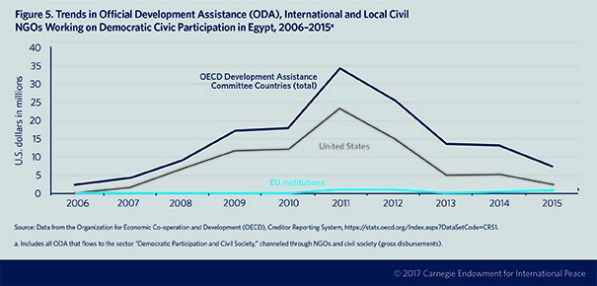
 

Figure 5


FH_FITW_Report_2018_WorldMap

Currently Egyptian government has applied aggressive economic reforms measures; included the liberalization of the exchange rate regime (i.e. floating the Egyptian pound), fiscal consolidation to decrease budget expenditures, tax upsurges, profound structural reforms, and stimulating business regulations to stimulate economic growth. These measures were the key features of the  IMF $12 billion loan agreement. Such reforms in addition to the democracy practices and civil rights issues in Egypt is creating a silent oppositions which no one knows if it would be a light for another upraise. While the Arab Spring’s has sparkled in Tunisia, set on fire in Egypt, cracked in Libya, damaged in Syria and tortured in Yamen, no one apparently can predict the second wave of the upraise and whether it will remain a Spring or it will turn into Autumn of the regimes in the Arab region.

…to be continued

References:
[1]   Peter Beaumont and Paul Harris, “US ‘Deeply Concerned’ After Egyptian Forces Raid NGO Offices in Cairo,” Guardian, December 29, 2011, https://www.theguardian.com/world/2011/dec/29/us-egyptian-forces-raid-cairo

Diving into Egypt’s Aid and Politics 5/5


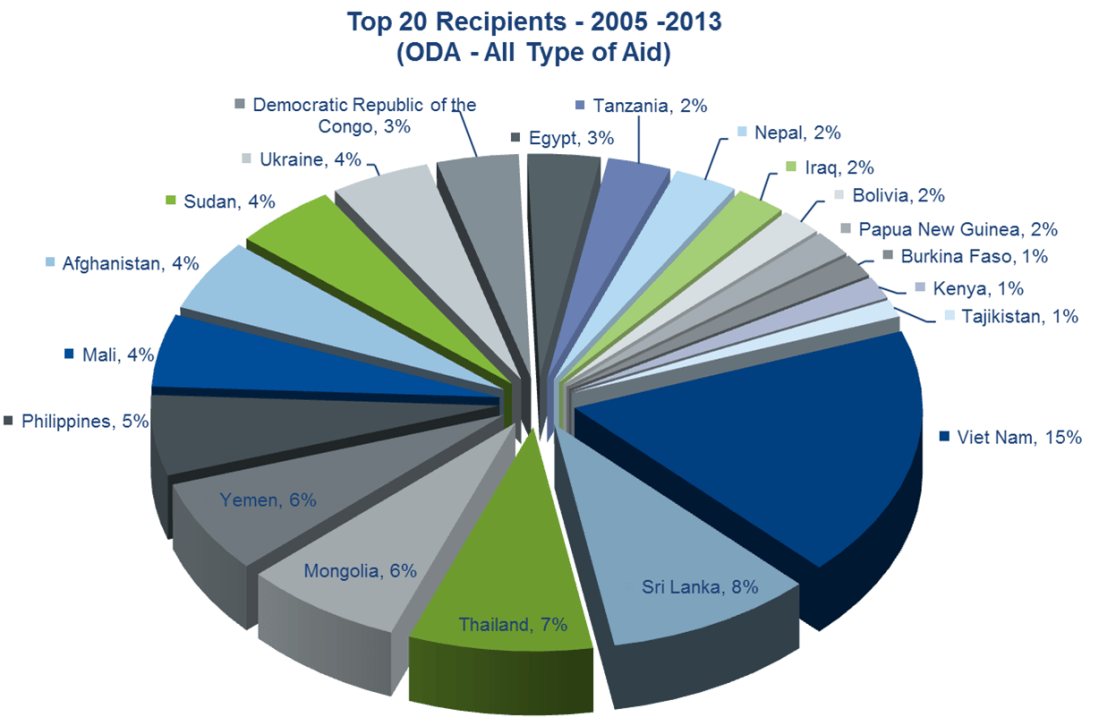
Egypt share of ODA

On the other side; having another dive in Egypt’s ties with the key aid organization, it was found that Egypt has been receiving aid from number of bilateral and multilateral organizations. The United Nations’ agencies represented by 24 agencies operating in Egypt like; UNDP, UNFPA, FAO, UN Environment …. etc., along with the World Bank Group subsidiaries’ like; World Bank, IMF, IFC, and other donors’ countries through their Foreign Affairs’ developmental departments; had played and continuing to play a vital role in pushing the wheel of development in Egypt. Through their partnership with the government, Non-Governmental Organizations (NGOs), Civil Society organizations (CSOs), and private sector at sometimes; these organizations have managed to implement several projects. Whether or not the given aid is conditional or unrestricted, whether they are affiliated with a free-interest donations or an interest loans based grants; these major aid organizations existence in Egypt is noticeable whether in spotting the multi-million dollars’ mega projects they are funding or the internal policies they are affecting. The majority of aid organizations along the globe embraced some obvious political objectives and targets in conjunction with socioeconomic goals (Carothers & Gramont, 2013).


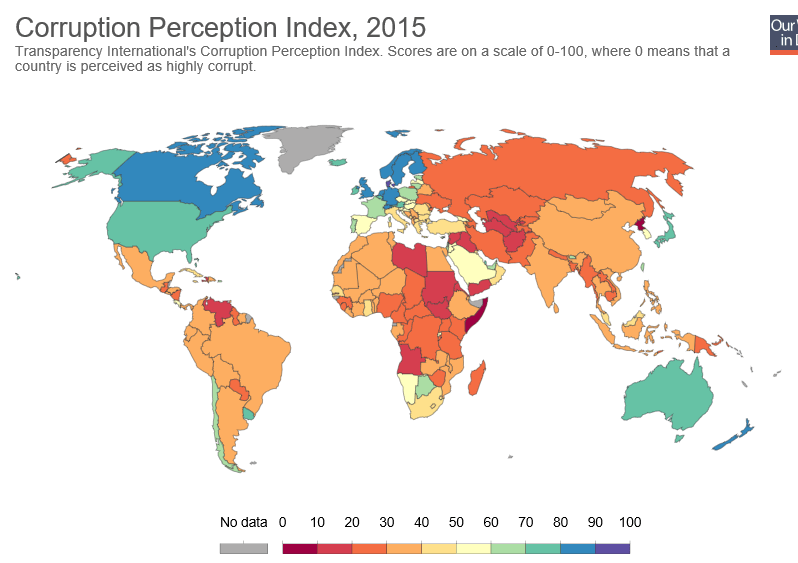
With reference mainly to Carothers & Gramont 2013[1], I will here illustrate couple of the major political objectives embraced and have been incorporated with consent and commitment by the Egyptian government in its collaboration with the aid organizations operating in Egypt. Anticorruption and Governance are two main objectives yet Gender Equality is of no less importance when it comes to Egypt’s developmental objectives.


TI-corruption-perception-index_v1_850x600

As Mick Moore (2001) debated that the political underdevelopment is a key reason of poverty and ill-being for numerous of the world’s inferior public which can be spotted prevailingly in the Sub-Saharan Africa and Middle East.[2]


In explanation of the Governance concept; while the World Bank introduced its first Governance and Anticorruption strategy (GAC) in 2007, the 2012 strategy had greatly paid attention to more outlined frameworks when it comes to designing and formulating its projects under their overall strategic plan. The framework list includes; significance of political economy analysis and applying courtesy to governance across development work, addressing formal and informal rules of the game, shifting from best practice approach to best-fit approach, easing the processes and advocate for enhancing the knowledge and assessment of formal change.


Also, Australia’s Aid Organization (AusAID) had set a governance strategy which emphasized the significance of backing up governance reforms and the fact that it should not be counted as an entirely technical matter. The quality of governance and the capability of nations to efficiently involve with their government, have a great impact on development outcomes. This is considered a political process, and state building is an ongoing process.

Looking into the recent Egyptian state, it is noticeable that in his attempts to present his regime as a promoter of democracy principles’ and implementations’; Mubarak trailed many times with the founding of a ““controlled” multiparty electoral democracy”. On many occasions Mubarak has declared that he doesn’t think that Egypt is ready for full-fledged democracy nor political pluralism is suitable for Egypt, he used to believe that for democracy to be achieved in Egypt, a long time has to be consumed. He even hinted to the pre-1952 revolution practice of pluralism that from his point of view proved its failure.[3]


References:

[1] Carothers, T and de Gramont, D (2013) “Development Aid Confronts Politics: The Almost Revolution. Washington” Carnegie Endowment for International Peace. The New Politics Agenda

[2] Mick Moore (2001) Political Underdevelopment: What causes ‘bad governance’, Public Management Review, 3:3, 385-418, DOI: 10.1080/14616670110050020

[3] Owen, R. (2001). Socio-economic change and political mobilization: The


Diving into Egypt’s Aid and Politics 2/5


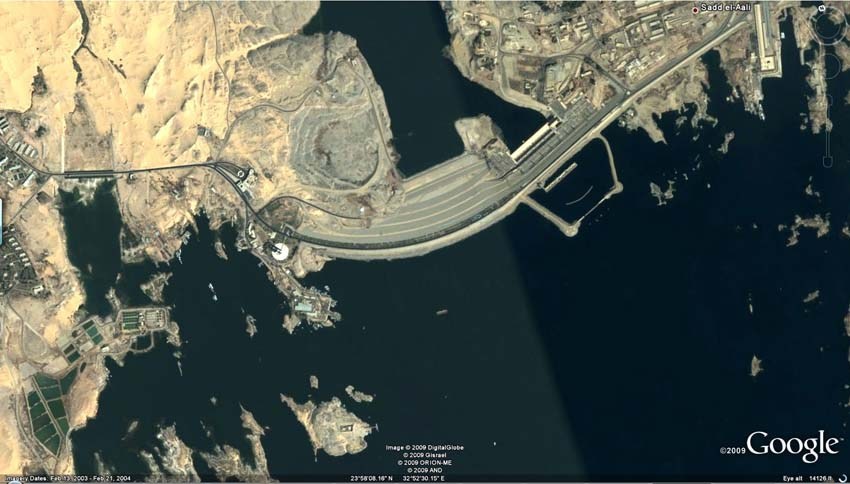
Aswan-High-DamWP

Aswan High Dam – An Overview Satellite – Google Maps

Starting with Gammal Abd El-Nasser’s era; when Russia (Soviet Union – USSR) by that time, aided his mega project the (Aswan High Dam) located at Aswan southern Egypt.

Initially, it was a tripartite combination of grants and loans offered from the United States of America, United Kingdom and supplemented with a long-term loan from the World Bank to finance the construction of (Aswan Dam). While the cold war was on fire between the USA, its allies the (Western Bloc) and the USSR and its (Satellite states); Nasser was surrounded and targeted by other superpowers. After the completion of what is so-called “Brioni meeting” of Nehru, Tito and Nasser; a meeting which had been excessively oversold to the Egyptian people as an international conference of major prominence as; “tete-a-tete of the neutralist “Big Three””, the USA had withdrawn the offer to finance the dam. Nasser’s regime (1956-1970) and propaganda was portraying USA, UK and Israel as the imperialistic mammoth enemies, whether he was representing the first as the capitalism devil, the second as the ex-occupier or the third as the current occupier.

Nasser, the “tactical neutralist” who was restless to pave the headway on the road to internal economic development, had slight choice but to bind himself, somehow partially, to the lateral which at present alleged out superior promises. He dilated towards the USRR for external aid support to pursue with his developmental agenda and militarily support in his war in liberating the Sinai rural peninsula against Israel after the 1956 tri-invasion (Dougherty, 1959).

This collaboration served all partners at the same bar, Nasser was fulfilling his promises to his nation with mega developmental projects in the heavy industries sector and the hydroelectric power without the dominance of the so-called “Egypt Enemies” while USSR was underpinning its existence in the Middle East region and reinforcing its war against the American imperialism domination by collaborating with as many allies as possible around the globe.


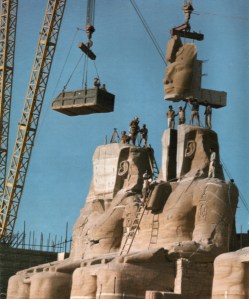
Abusimbel

Abu-Simble Temple reallocation to avoid flood of the Nile

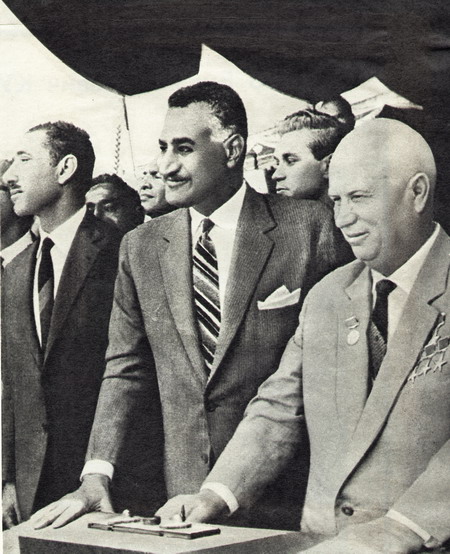
Aswan Dam Project was prevalent symbol of reform, development and a better standard of living for the Egyptians. As described by the Russian leader Nikita Khrushchev “as the eighth wonder of the world”, the spectacular proportions’ project had a number of benefits for Egyptian economy and national stability. Initially It was designed to upsurge capacity of cultivable land by 25-30 per cent, hence keeping an adequate frequency with Egypt’s growing population. By utilizing the flood season as an advantageous cultivating season allowing one or two extra crops to be cultivated on 700,000 acres of land which could now be irrigated during the flood season. It would decrease flood damage, avoid the loss of valuable mud, and assist in additional consistent river navigation. It would create new jobs in the labour market among the agricultural, technical, engineering, professions. Lastly, it would generate 10 billion kilowatt-hours of electricity allowing to power modern industries.


As illustrated in Johnson (1972), Nasser’s regime ideological orientation had steered it to applause capital-intensive development schemes based more likely on a capitalist model than labour-intensive schemes on a revolutionary socialist model. Since Nasser needed prevalent popular advocacy for its regime so it could carry out its developmental programs, he initially leaned towards the US yet could not embark on Western aid with its affiliated political conditions. At this stage, nevertheless, Nasser was protected by USSR’s interventions. Under the aforementioned status quo, it was clear that Nasser’s regime was more likely to shadow a capitalist model yet he had to dwell by the policies of the country that saved him from economic failure. The influential power that USSR had played on Egypt’s policies during Nasser’s time which was translated in embracing and preference of socialism over capitalism in Egypt’s internal economic policies. Hence initially these incorporated economic decisions did not essentially have socialist purposes, but rather they were regular economic resolutions applied to repair the existing hard economic conditions as rapidly as possible. [1]

Gamal-002

Description: Nikita Khrushchev with Nasser. Image taken in Egypt, during the ceremony of the divert of the Nile at Aswan High Dam  –  Source: Wikipedia


Dougherty (1959), debates; that it is the Americans’ decision to withdraw their offer to finance the dam was the reason behind the turbulences which have traumatized the Middle East since 1956. Had the United States not insulted “Nasser’s amour proper”, an insult that had a domino effect starting with; a deterioration of the West’s position in the Arab Region, the nationalization of the Canal Company, the Anglo-French attack, the raise of civil war in Iraq, Jordan and the Lebanon that torn these countries for their pro-Western policies. Thus the Aswan decision a rotary fact shaping the political relationship between the West and the Arab Region.[2]

…. to be continued

References:

 [1] Johnson, P. (1972, July). Egypt under Nasser. Middle East Research and Information Project (MERIP), pp. 3-14.[1] 

[2] Dougherty, James E. “The Aswan Decision in Perspective.” Political Science Quarterly, vol. 74, no. 1, 1959, pp. 21–45. JSTOR, www.jstor.org/stable/2145939

Diving into Egypt’s Aid and Politics 3/5


Camp David

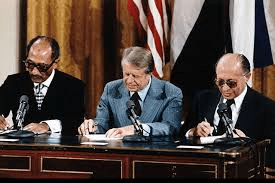
When Anwar Al-Sadat came to power in 1970; he entirely shuffled Egypt’s ties with the world’s superpowers; expelling the Soviets in 1975, leaning towards the United States of America and signing the famous Camp David peace treaty on 1979 after the 1973 war with Israel.


The economic ties between Egypt and the Arab countries have become gradually extensive through the 1970s: Egypt had benefited out of substantial aid from its Arab allies, particularly after the 1973 war with Israel; Egypt became a popular destination for tourism from the Arab States, which yielded above 50 per cent of the main Egyptian industry , the number of hired Egyptian professionals and workers was increasing progressively at the oil countries as well as the flow of their remittances back to Egypt as well as the increase of the trade between Egypt and the other Middle eastern countries.[1]


The signed treaty was a double edged weapon, Egyptian ties were extended to cross the Atlantic Ocean from one side and the Sinai Mountains from the other; to declare peace and new developmental agenda with brand new allies whom were the same yesterday ex-enemies, on the other side, Egyptians ties with its regional neighbours and the partners of the Arab Nationalism ideology; which witnessed its climax glory days during Nasser’s time.


Once the treaty got signed; the Arab World had turned against Egypt with all its economic powers and political pressure. In response to Camp David’s conference in November 1978 which was paving the way for the signing of the Camp David treaty, the Arab countries united against Egypt in Bagdad’s first summit, demanding serious bunch of sanctions. It is worth mentioning that the official Arab economic aid (excluding military aid) to Egypt in 1978 was an estimated $750 million.


After Sadat had signed the treaty in 1979, all of the Arab countries’ foreign and economic ministers gathered at Bagdad for a second summit with agreement on clear sanctions against Egypt:

  1. discontinuing loans, deposits, guarantees, bank credit facilities, and financial and technical aid from Arab governments and their organizations to the Egyptian government and its organizations;

  2. banning any economic aid to Egypt from the Arab funds, banks, and financial institutions within the sphere of the Arab League and of other joint Arab organizations;

  3. stopping Arab governments and organizations from acquiring bonds, shares, debentures, and debt issues offered by the Egyptian government and/or its financial organizations;

  4. suspending Egypt from the Arab League and from organizations and funds affiliated with it;

  5. halting the sale to Egypt of oil and oil products;

  6. prohibiting commercial exchanges with organizations (public or private) that cooperate with Israel, in accordance with the terms of the Arab economic boycott.[2]


As a result of this summit nine Arab countries broke off their diplomatic relations with Egypt, as well as the suspension of the Egyptian membership in many Arabic financial and technical organizations including the Arab Monetary Fund, the Islamic Conference, and the Organization of Arab Petroleum Exporting Countries (OAPEC).


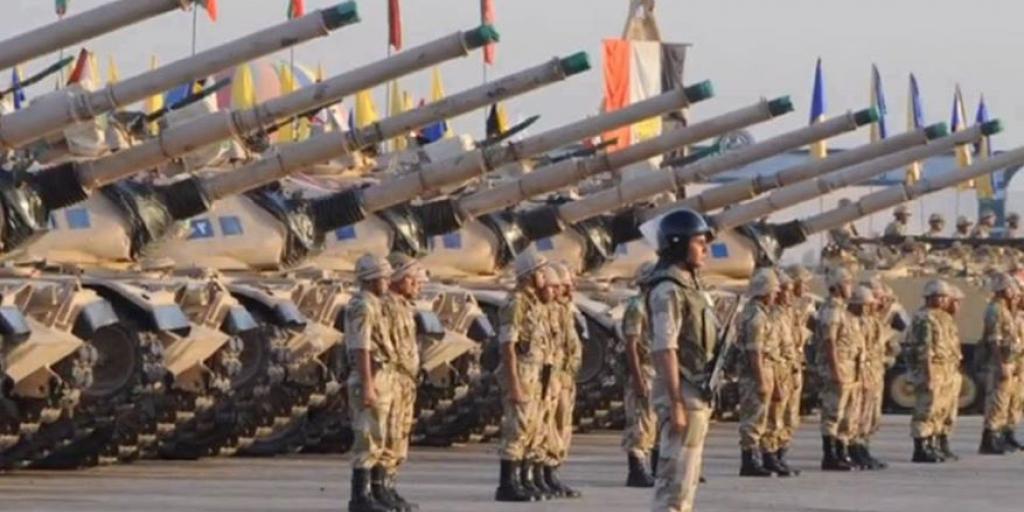
On the other side, Camp David treaty granted Egypt and Al-Sadat administration on an annual basis a military aid of US$1.3 billion from the United States of America, which mainly assisted in keeping the Egyptian military modernized. The military aid was one kind of number of aid kinds that US had committed to support Egypt with, it enabled the replacement of Egypt’s outdated USRR’s hardware weapons acquired during Nasser’s era, it also facilitated systematic multiparty military exercises among Egypt, US and Israel. Along other forms of aid like… economic, humanitarian, and other aid, which stipulated Egypt as one of the top countries receiving aid from the USA up to date, an aid that amounted to more than US$25 billion[3].

Egyptian Army

The peace treaty helped not only the two conflicted signatories but the positive impact extended to other relevant parties, like Jordan and the US itself. On the level of trade boosting; “one-third of Egyptian exports to the United States come from Qualifying Industrial Zones (QIZ). Mandated by Congress in 1996, the first QIZs enabled Jordan to have free-trade access to U.S. markets so long as a percentage of the exported goods consisted of both Jordanian and Israeli inputs. Egypt — Israel’s only other treaty partner in the region — joined the system in December 2004. Today, its QIZs employ more than 120,000 Egyptians and export approximately $763 million worth of goods to U.S. shores per year, or a third of all Egyptian exports to the United States.” It was a mutual benefit for both Egypt and Israel when comes to Energy sector; Egypt’s energy revenue increased when selling oil to Israel had started, on the other side Israel had secured a stable energy resource summed up for one-third of Israel’s fuel imports, for couple of decades to pursue with its national developmental goals. US had secured a powerful role in the Region playing as the (Peace Broker) and Egypt ties with US, Israel, the Palestinian authority and Hamas (Palestinian repel group) has tightened as a major peace keeper which secured for Egypt a stability and security far from risk of conflicts and possible wars that can threatens its developmental efforts. (Makovsky, 2011).[4]

Similar to Egypt, US aid connections with Afghanistan, Iraq, Israel, and Pakistan—all are targeting at expanding U.S. diplomatic and security interests. On the same steps of US, the great powerful countries like United Kingdom, Japan, France and aid programmes of the main donors have several motivations beside the merely announced socioeconomic developmental targets (Carothers & Gramont, 2013).[5]

Well no one can confirm that Camp David was the reason behind Sadat’s assassination , on the 6th of October 1981, only two years after his consent on the treaty or not; by the hands of a number of officers, from his own army that granted him victory in his war with Israel on 1973; yet for sure it was the driving reason behind this assassination. The hush-hush measures that Sadat took after his commitments to Camp David treaty on the national level was aggressive and provocative, not to say the least; to all political parties and groups in the Egyptian society in response to their opposition to the treaty.


…to be continued


References:

[1]  Victor Lavy, (1984). “The Economic Embargo of Egypt by Arab States: Myth and Reality Author(s):” Source: Middle East Journal, Vol. 38, No. 3, pp. 419-432. Published by: Middle East Institute Stable URL: https://www.jstor.org/stable/4326855

2] Victor Lavy, (1984). “The Economic Embargo of Egypt by Arab States: Myth and Reality Author(s):” Source: Middle East Journal, Vol. 38, No. 3, pp. 419-432. Published by: Middle East Institute Stable URL: https://www.jstor.org/stable/4326855

[3]  Egypt” Archived 21 January 2011 at the  “ Wayback Machine U.S. Department of State.” March 2008. 28 April 2008.

[4] Makovsky, David (2011) “Reviewing Egypt’s Gains from Its Peace Treaty with Israel” The Washington Institute Website. https://www.washingtoninstitute.org/policy-analysis/view/reviewing-egypts-gains-from-its-peace-treaty-with-israel

[5]Carothers, T and de Gramont, D (2013) “Development Aid Confronts Politics: The Almost Revolution. Washington” Carnegie Endowment for International Peace. The New Politics Agenda

Diving into Egypt’s Aid and Politics 1/5

Egypt Flag Revelution


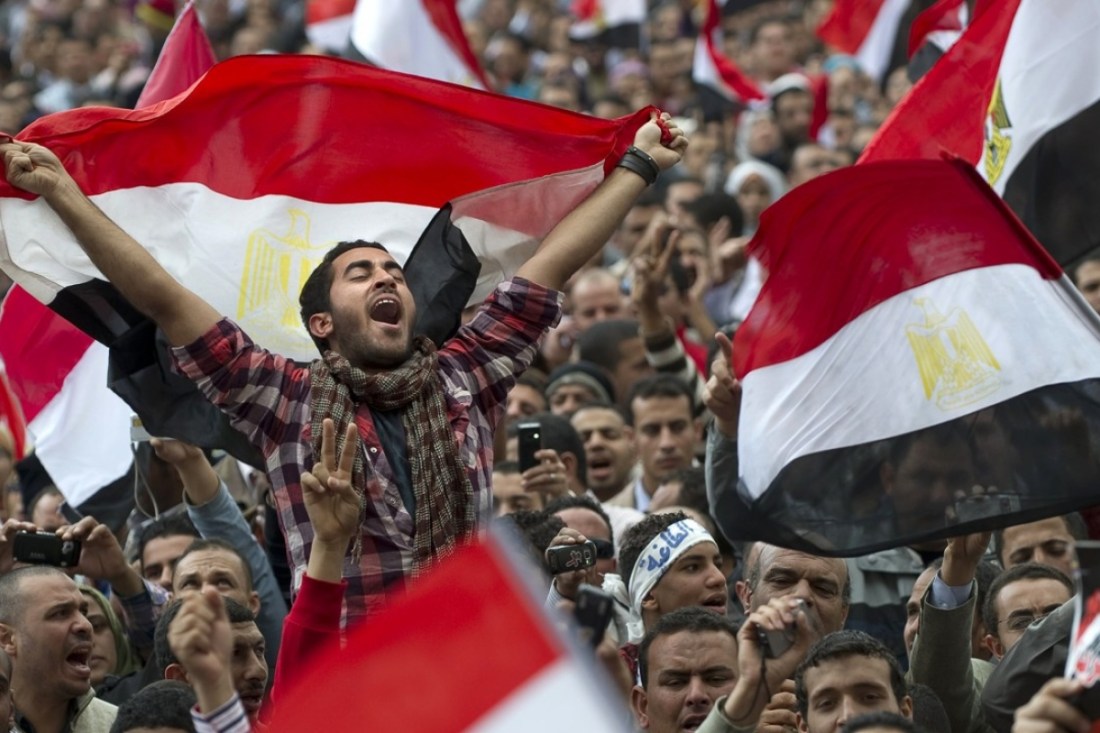
Am I an accountant by profession?… Am I a kind of revolutionary activist since 2011 Egypt’s revolution raise started amidst the Arab Spring protests? … Am I the mother of 3 who would aspire to pave the world for qualitative life to her children whether in their own home land or any other part of the globe? … Am I the international development practitioner who is working for one of the United Nations’ agency supporting in pushing the wheel of development across the world? … Am I the researcher for an answer and mitigation for the poverty and inequality issues in my MSc Programme at the University of Birmingham? …

While these questions run in my head every single day, until now I haven’t figured out what identifies me more than the other. Figuring out what identifies me more; resembles the nature of social sciences nature; and what one of my favorite professors in the MSc Programme once told me; that in social sciences it is not about acquiring a framed answer for the problematic existing issues but it is rather about how many valid reasonable questions you raise to tackle these issues. So at this stage I will keep the question raised and will pursue towards enhancing it instead of finding an answer.


Shifting careers from banking industry to the development arena 5 years ago; was neither planned for nor expected. As an expat in another country than my own I had the chance to be offered a position in one of the UN agencies. I think the reasons behind my decision to do this smooth swap between both careers beside working for an organization like the UN and the relatively decent salary!… 🙂 It rather came from two facts; firstly; it has been always “Politics” as a specialization that I was aspiring to pursue in my undergraduate studies and due to couple of reasons, this aspiration couldn’t turn into reality, secondly; as a native of a developing country (Egypt); “Development” for me is a word that my own country’s core progress efforts had been evolving around and still tied to.


A deep analysis of all types of aid Egypt has been benefitting from; would definably illustrate the coherent tight between “Development” and “Politics”. The variation between the key donors to Egypt across the past 70 years’ period would reflect not only on how politics plays a key role in development but on how developmental targets is interlinked with political endeavors’ and targets.

Although the name of my blog “Politica” can be recognized to someone who knows Italian as the direct translation for “Politics”, yet the hidden meaning that I am referring to; is not only “Politics”, but the usage of the word by the mob of the Egyptian common middle class when describing a manipulative attitude or behavior, which related greatly with an interesting definition of Politics and a useful distinction is “whether is it the rules of the game and the games within the rules”[1] .The usage of word “Politica” is common since the Egyptian slang until now is full of high usage of (English, French, Italian, Turkish, Greek) words and terminologies; as these nationalities were living and working in Egypt as expatriates before the 1952 Egyptian Revolution roused by the “Free Officers Movement”. Those expats had gradually left Egypt after Nasser came to power and the “1956 Tripartite Aggression” on Egypt in the Suez Crisis.

It would help to shed some highlights on how Egypt, presented in its successive governments; reacted to international aid so you would have a full picture on the volume of development efforts consumed on the ground. In my diving in Egypt’s ODA history, I will cover the era succeeded Nasser’s overriding the power up to date. Egypt has accepted and been involved in all different types of aid; for example, but not limited to; in the form of “Industrial Aid/Project Based Aid” from (Soviet Union), “Military Aid” from (USA), “Developmental Project-based Aid” from (UN agencies), “Allied Support Aid” OR “Voluntary Aid” from (number of countries, specifically the Gulf Stats) and “Tied Aid” from (World Bank Group subsidiaries’).

Net ODA received per capita (current US$) in Egypt was reported at 22.26 USD in 2016, according to the World Bank collection of development indicators, compiled from officially recognized sources.[2]


….to be continued


[1] Hewitt, Tom. (2019) “Development Politics Module Class”, University of Birmingham.

[2] Trading Economics Website 2019. Accessed on 21st March 2019 [ https://tradingeconomics.com/egypt/net-oda-received-per-capita-us-dollar-wb-data.html ].